
As the weather turns, most patios empty out. Cushions go into storage, tables sit unused, and a restaurant loses seats for months. It doesn’t have to work that way. With the right system, an outdoor space can stay comfortable well into the cold season.
We recently finished an all-season enclosure for Del Frisco’s Double Eagle Steakhouse in Greenwood Village, Colorado, a place with real winters. Here are the five parts that made it work, and what to think about for your own patio.
1. A roof that opens and closes
A motorized louvered roof is the heart of an all-season patio. On a sunny day, open the louvers for light and air. When it rains or the temperature drops, close them to keep the space covered and hold in warmth. Integrated gutters carry water away, so it doesn’t run onto guests.
2. Shades on the open sides
A roof alone doesn’t stop wind. Motorized shades on the open sides do. Clear vinyl keeps the view while blocking wind and rain, and sun fabric cuts glare in summer. On the Del Frisco’s patio we installed 18 shades, and a week of heavy rain confirmed the space stays watertight with them closed.
3. Fixed panels where you don’t need to open
Not every side needs to move. Polycarbonate side panels on the corners give permanent protection and let light through. Patio doors keep the space accessible and up to code.
4. Heat that works outdoors
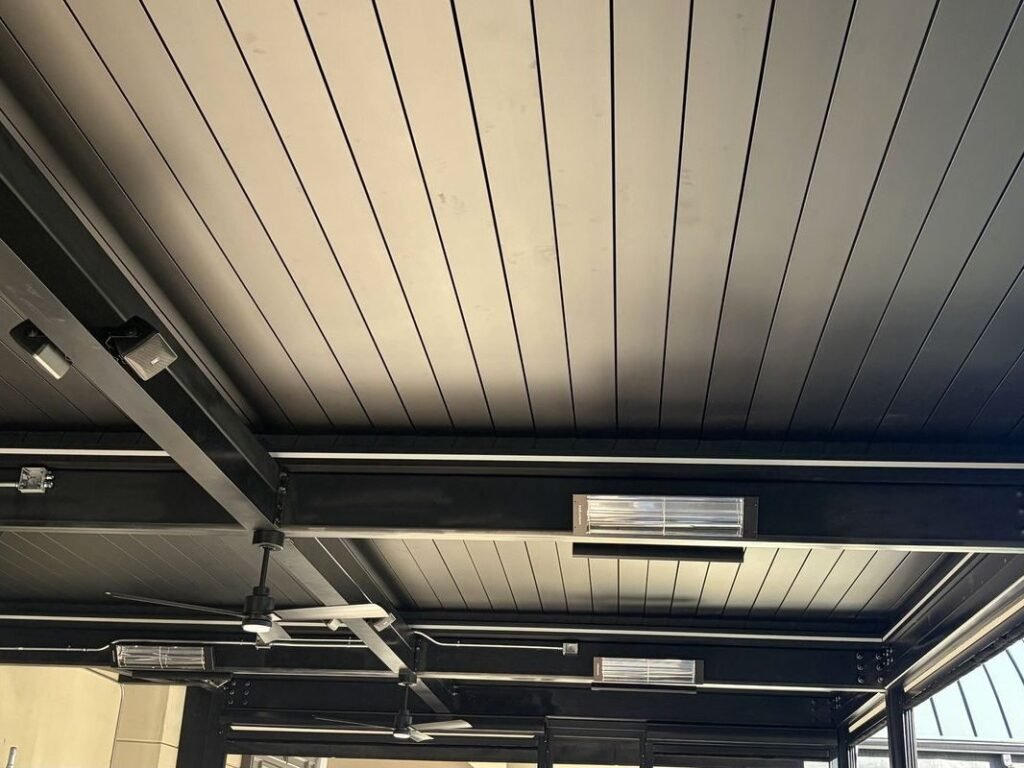
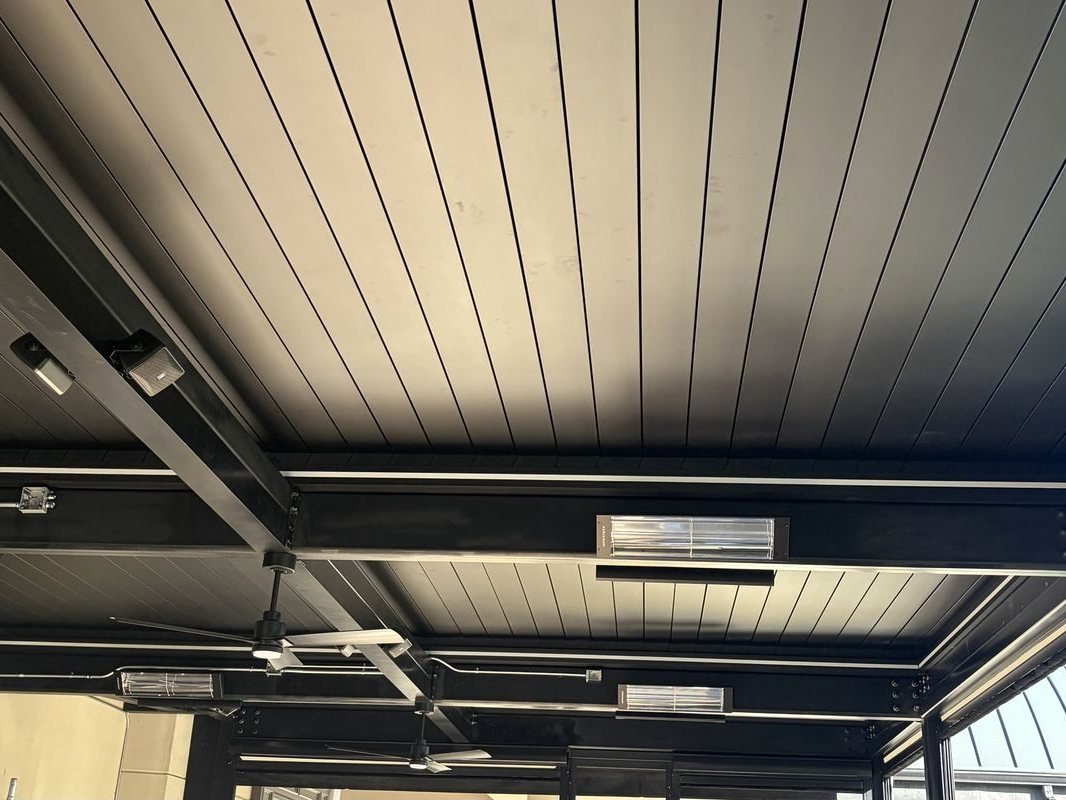
Infrared heaters warm people and surfaces rather than the air, which makes them well suited to semi-open spaces. Mounted overhead on the structure, they stay out of the way. Del Frisco’s has 16 Infratech heaters spread across the seating areas, with ceiling fans to keep air moving.
5. Lighting and sound for the evening
Winter means early sunsets. LED lighting built into the roof perimeter and a patio speaker system make the space feel like a proper dining room after dark, not a covered porch.
Planning tips
- Plan the electrical early. Heaters, motors, lighting and audio all need power. Bringing an electrical engineer in at the start avoids rework.
- Build everything into the structure. Cables pulled inside the beams before the roof closes look cleaner and last longer.
- Think about drainage. Where the water goes when the louvers close matters as much as the roof itself.
- Allow time for permits. Enclosed patios often need engineering and inspections. More on that later this month.
Thinking about extending your patio season, at home or at your restaurant? Contact us or call 281.720.7272, and we’ll recommend the right combination for your space. You can also browse our louvered pergola systems.